Open workspaces have changed the way people work. Instead of everyone having a private office, today’s workplaces often bring employees, entrepreneurs, freelancers, and teams together in shared environments.
The benefits are clear: more flexibility, easier collaboration, and opportunities to connect with people outside your immediate team.
But sharing a workspace also comes with an unwritten rulebook.

From speakerphone conversations to meeting-room etiquette, here are 10 office etiquette rules nobody formally taught you, but everyone should know.
1. Keep Your Volume in Check
You might be having a great conversation, but the person three desks away may be trying to meet a deadline.
In an open workspace, conversations can travel farther than you think. Keep your voice at a reasonable level, especially when discussing something for an extended period of time.
If a conversation requires a louder voice, a lot of back-and-forth discussion, or sensitive information, consider moving to a private meeting room.
2. Headphones Are a Signal…Respect Them
Headphones can mean different things: someone may be listening to music, joining a virtual meeting, or simply concentrating.
Whatever the reason, headphones often communicate “I’m focused right now.”
Before interrupting someone wearing headphones, consider whether your question can wait. If it can’t, a quick message may be less disruptive than tapping them on the shoulder.
3. Don’t Turn Your Desk Into a Conference Room
Open workspaces are great for quick conversations. They’re less ideal for lengthy meetings.
If five people suddenly gather around one desk for a 45-minute discussion, you’ve effectively created an unofficial conference room — and everyone nearby has become an unwilling participant.
For longer conversations, presentations, interviews, or team meetings, use a designated meeting space.
4. Book Meeting Rooms for Meetings
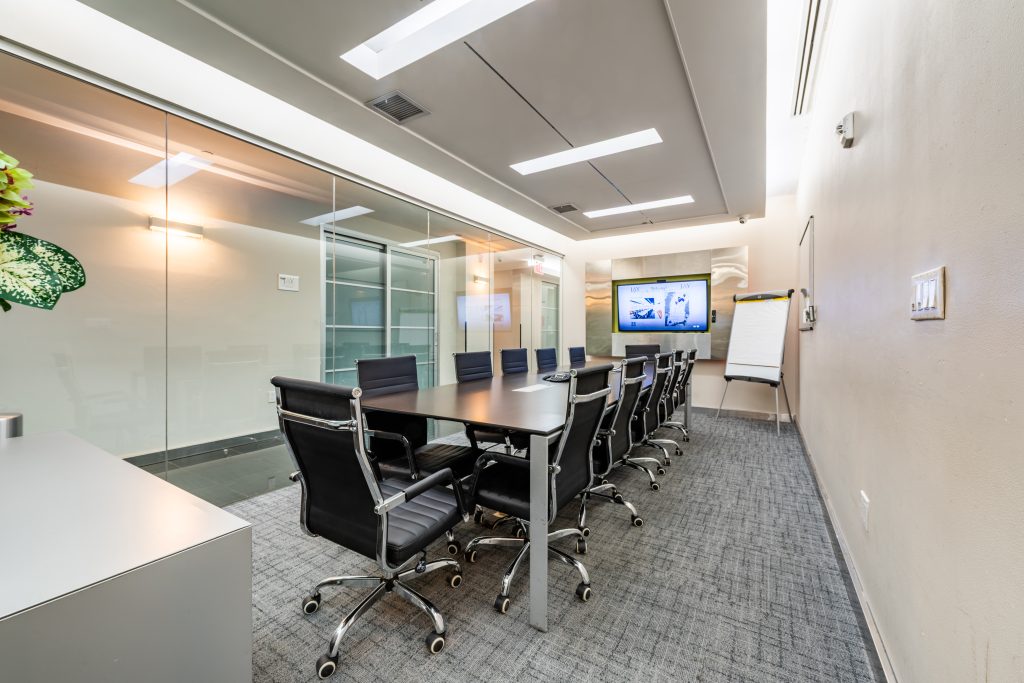
If your workplace has reservable conference rooms, use them strategically.
Meeting rooms are designed for conversations that require privacy, collaboration, or technology. They are particularly useful for client calls, interviews, presentations, training sessions, and team discussions.
At flexible office environments like Jay Suites, businesses can reserve professional meeting rooms when they need additional space rather than relying on their everyday workspace.
The result? A better experience for the people in the meeting — and fewer distractions for everyone else.
5. Don’t Overstay Your Meeting Room Reservation
There’s nothing worse than having a meeting scheduled immediately after someone else’s — only to discover they’re still using the room.
Keep an eye on the clock and leave enough time to clean up and reset the space before the next group arrives.
If your meeting is running long, check whether another space is available rather than assuming you can keep the room.
6. Clean Up After Yourself
It sounds obvious, but shared spaces only work when everyone treats them like shared spaces.
That means:
- Throw away your coffee cup.
- Take your food with you.
- Wipe down the workspace when appropriate.
- Return chairs and furniture to their original positions.
- Don’t leave personal belongings behind.
The next person shouldn’t be able to tell what you had for lunch.
7. Be Careful With Speakerphone
Speakerphone might be convenient at home. In an open workspace, it can quickly become everyone’s problem.
Whenever possible, use headphones for virtual meetings and phone calls. If a call requires speaker audio, move into a private room or designated meeting space.
Your coworkers will thank you.
8. Don’t Assume Everyone Wants to Chat

One of the best things about shared workspaces is the opportunity to meet new people.
But networking doesn’t mean everyone wants to network all day.
Pay attention to cues. Someone working with headphones on, typing quickly, or preparing for a meeting may not be looking for conversation.
A quick hello is friendly. An unsolicited 20-minute conversation at someone’s desk is something else.
9. Respect Privacy
Open workspaces can make it easy to see what other people are working on.
That doesn’t mean you should.
Avoid looking at someone’s screen, listening to confidential conversations, or discussing information you’ve accidentally overheard.
Privacy is everyone’s responsibility in a shared environment.
For confidential meetings or sensitive conversations, use a private office or meeting room whenever possible.
10. Leave the Space Better Than You Found It
This might be the simplest rule of all.
Whether you’re using a coworking area, conference room, lounge, phone booth, or shared kitchen, think about the person who will use the space after you.
Straighten the chairs. Take your belongings. Throw away your trash. Reset the room.
Good office etiquette isn’t about being overly formal. It’s about making the workspace better for everyone.
Why Office Etiquette Matters More in Flexible Workspaces
As businesses adopt hybrid schedules and flexible office arrangements, people are increasingly sharing professional environments with colleagues, clients, entrepreneurs, and teams from different companies.
That makes workplace etiquette more important — not less.
A well-managed shared workspace gives people the flexibility to choose the environment that works best for the task at hand.
Need to focus? Find a quiet workspace.
Need to collaborate? Move to a shared area.
Need privacy? Reserve a meeting room or private office.
Need to host a client? Choose a professional conference space.
Jay Suites offers a range of flexible workspace options throughout New York City, including private offices, coworking spaces, meeting rooms, conference facilities, and shared areas designed to accommodate different ways of working.
The goal isn’t to eliminate the flexibility of open workspaces. It’s to make that flexibility work better for everyone.
The Unwritten Rule: Be Considerate
There may never be an official handbook covering every situation you’ll encounter in an open workspace.
But most office etiquette comes down to one simple principle:
Be aware that you’re sharing the space.
Keep conversations at a reasonable volume. Respect privacy. Use meeting rooms when you need them. Clean up after yourself. And remember that the person sitting next to you may be working on something completely different from what you’re doing.
A little consideration can go a long way toward creating a workspace where everyone can do their best work.
Looking for a flexible workspace in New York City? Explore Jay Suites’ offices, coworking spaces, and meeting rooms designed for the modern workday.